Opening a gym in your hotel or day spa
a turnkey service for a profitable investment
Creating a gym in your hotel or premium wellness center has become essential to meeting the growing expectations of health- and wellness-conscious guests. Whether your property caters to business travelers, active holidaymakers or guests seeking a relaxing break, a well-designed fitness area is a real asset. It is not only a compelling booking incentive, but also an opportunity to generate additional revenue through memberships and tailored fitness programs. At Wellness Consulting, we help you integrate a dedicated sports facility that is both functional and appealing, without compromising on style or atmosphere: a space your guests will love, with an increase in revenue to match.

Steps to setting up a gym
| Step | Objective | Expected results |
|---|---|---|
| Clientele analysis | Identify the needs of future users | An offering tailored to your guests |
| Space design | Optimising flow and comfort | A functional, welcoming gym |
| Equipment selection | Meeting real-world needs | A smart, sustainable investment |
| Expanding your offering | Develop a distinctive service offering | Additional revenue |
| Marketing | Making the most of your new space | More bookings and greater guest loyalty |
Understanding your guests’ needs
with fitness equipment
Before getting started, it is essential to clearly define your guests’ expectations so you can design a space that’s perfectly suited to them. Our team is committed to:
▸ analyse your clientele: identify your visitors’ profiles (business travellers, families, casual or experienced athletes, their expectations and likelihood of committing in the short and medium term).
▸ study the trends: keep up to date and always demand excellence in the latest equipment used in gyms.
▸ carry out a competitor analysis: compare the fitness facilities offered by other hotels and spas in your category to set yourself apart.
This first step helps us design a fitness offering that meets your guests’ specific needs.
Plan the space and set the budget
Increase Your Hotel’s Profitability

A well-designed fitness area is practical, attractive and accessible. We’ll guide you through the planning process.
Making the most of your hotel or hospitality venue’s fitness space
▸ choose a central, accessible location;
▸ organise the space into dedicated zones: cardio, strength training, stretching, etc ;
▸ create a comfortable layout that complies with safety standards.
Budget planning: business plan considerations for a gym
We’ll work with you to put together a detailed budget covering:
▸ sports equipment suited to your guests;
▸ renovation work (flooring, lighting, ventilation) ;
▸ maintenance costs.
Our expertise helps us optimise costs without compromising on quality.
Choosing fitness equipment
suited to your wellness or hotel guests
Choosing your equipment suppliers is a crucial step in ensuring the success of your gym. We work with trusted suppliers to offer you tailored solutions.
Based on our analysis of your clientele, we’ll recommend a range of training and strength equipment:
▸ Cardio equipment: treadmills, bikes, rowing machines and ellipticals.
▸ Strength training: dumbbells, kettlebells and selectorized machines.
▸
Accessories:
yoga mats, resistance bands, fitness balls, or specialist equipment for the innovative fitness activities we offer.
We prioritise ergonomic, durable and easy-to-maintain equipment to ensure your guests enjoy a safe, optimal experience.
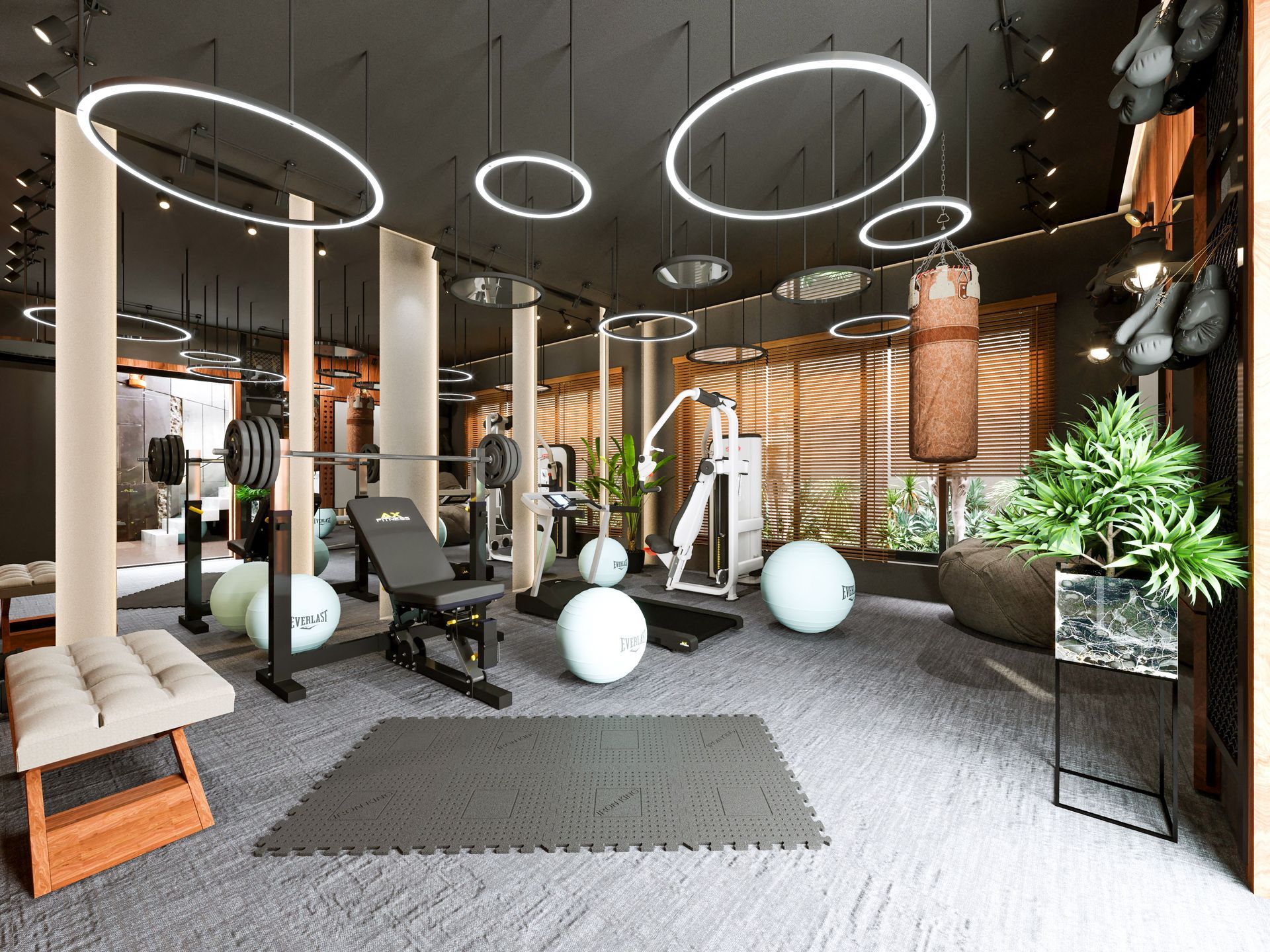
Recommended equipment for your guests
| Target Clientele | Priority equipment |
|---|---|
| Business travellers | Treadmills, bikes, dumbbells, stretching |
| Wellness guests | Pilates, yoga, mobility and recovery accessories |
| Regular gym-goers | Resistance machines, free weights, high-performance cardio |
| Active seniors | Low-impact equipment, balance and mobility |
| Upscale hotels | Premium equipment, coaching area, recovery zone |
Major asset
A gym is no longer just an added amenity. In a hotel or premium spa, it enhances the guest experience, encourages bookings, generates additional revenue and helps build loyalty among guests who care about their wellbeing.
Create a unique guest experience with your fitness center
hotel or urban spa, create added value

Layout and design
▸ a carefully chosen, welcoming décor;
▸lighting and sound suited to exercise, without disturbing other guests;
▸ mirrors to make the space feel larger.
Create a Sports Services Menu
▸ stay-based flash passes for your guests;
▸ targeted programmes: weight loss, cardiovascular fitness, improved circulation…
▸ medium- and long-term memberships for returning clients;
▸ one-to-one personal training;
▸ sports and relaxation packages tailored to your spa offering.
You can also generate additional sales from quality supplements, detox or energy drinks, fitness clothing, sports shoes, small Pilates accessories, and more.
Would you like to create a product range under your hotel’s brand? Visit our “Brand support” page.
Offer a varied and original fitness program
Combine must-have disciplines with out-of-the-ordinary activities to create a balanced, memorable programme. A bold but considered approach meets the varied expectations of your visitors while setting you apart from the competition. Here are some examples of what our consultancy can put in place for you:
▸ aerial dance;
▸ water-based activities (aquatraining, aquaboxing…) ;
▸ outdoor training;
▸ meditation practices ;
etc.
We can train your in-house team or recruit experienced personal trainers for you. Investing in qualified staff ensures high-quality services and allows your facility to operate independently.
Discover all the fitness activities we offer in this article about opening a gym.

Promoting your gym
at your hotel or wellness centre


Once your gym is up and running, we can help you promote it to your fitness-loving guests.
Featured in your marketing
▸ feature your fitness services on your property’s website and in brochures;
▸ regular posts on your social media channels ;
▸ including gym access in your offers and packages.
Sports and relaxation packages and events
▸ offer taster sessions ;
▸ host fitness events to strengthen your brand image.
We’ll help you develop an effective communications strategy to maximise the appeal and profitability of your fitness space.
Why choose Wellness Consulting?
With our expertise in gym design and fit-outs for hotels and spas, we offer:
▸ a personalised approach tailored to your establishment ;
▸ turnkey solutions, from the initial assessment through to launch;
▸ close monitoring to ensure your guests’ satisfaction.
Contact us today to turn your project into reality and offer your guests an exceptional fitness experience at your establishment.
Revenue streams for a hotel gym
| Revenue stream | Example |
|---|---|
| Gym access | Included or charged separately, depending on the package |
| Personal training | Personalised sessions |
| Group classes | Yoga, Pilates, HIIT |
| Wellness programs | Weight loss, getting fit, recovery, longevity |
| Product sales | Sports nutrition, drinks, apparel and accessories |
| Spa + Fitness Packages | High-value bundled offers |
Frequently asked questions
on creating a fitness room
How much does it cost to open a gym?
The cost of setting up a hotel gym typically ranges from €15,000 for a basic fitness area (a few cardio machines and a free weights corner) to over €150,000 for a premium space integrated into a spa, with a coaching area, high-end equipment and a carefully considered design. A complete mid-range space (cardio, strength machines and a stretching area) will usually cost between €50,000 and €100,000. This budget includes equipment, flooring and ventilation, lighting, and sometimes partitioning or soundproofing work. These figures are indicative only and can vary considerably depending on the country, the intended level of service and whether you choose new or refurbished equipment.
What are the steps to creating a gym?
Creating a hotel gym involves five key steps: analyzing your clientele to identify the needs of future users (business travelers, wellness guests, regular gym-goers, etc.); designing the space to optimize flow and comfort; selecting equipment based on actual usage rather than generic standards; developing your service offering to stand out and generate additional revenue; and finally, promoting the new space to existing guests and attracting new bookings. Each step informs the next: without first analyzing your clientele, you risk choosing unsuitable equipment, whatever your budget.
What regulations apply to gyms and fitness centers?
In France, a gym within a hotel is subject to ERP regulations (Establishments Open to the Public), most often classified as type X (sports facilities) or included in the hotel’s own category, depending on its configuration. Requirements cover fire safety, accessibility for people with reduced mobility (PRM), ventilation and flooring suitable for sports activities. The category (from 1st to 5th, according to occupancy) determines the level of requirements, including alarm systems, emergency exits, smoke extraction and approval from the relevant safety commission before opening to the public. Internationally, equivalent requirements apply under different names (building codes and life safety codes in the United States, ADA accessibility standards, and local regulations in each country).
Is a gym profitable?
Yes, a gym can become profitable quickly, provided it isn’t limited to complimentary access for resident guests alone. Three strategies can significantly speed up the return on your investment: if you run a hotel, open your gym to non-residents through monthly or annual memberships; position it as an exclusive private club with a limited number of external members paying a premium fee; or include gym access in wellness stays, generating revenue per program rather than from access alone. A gym designed solely for resident guests depends on the property’s occupancy rate. One that also welcomes external users generates recurring revenue that is largely independent of booking cycles. You can also generate additional income through personal training, group classes (yoga, Pilates, HIIT), wellness programs (weight loss, fitness, recovery), retail (sports nutrition, accessories) and high-value spa + fitness packages. *
How big should a hotel gym be?
For a hotel, we generally recommend a minimum of 30–40 m² for a functional fitness area in a mid-sized property, with an indicative ratio of around 0.5 to 1 m² per room, depending on the intended positioning. For a business, residential property or independent club, the benchmark is different and is based on the number of users expected to exercise at the same time (around 3 to 5 m² per occupied workout station), rather than a room-based ratio. There is no single standard; the right benchmark depends primarily on the type of project.
Do gym staff need to be qualified?
Yes. Whenever a qualified instructor supervises or coaches clients in a gym, regulations require them to hold a recognised qualification demonstrating their competence to lead paid physical activities. In France, this is usually a BPJEPS Activités de la forme, a CQP or a DEJEPS, along with mandatory registration with the Register of Sports Instructors (RES); equivalent requirements apply internationally under other certifications (REPs in the UK, NASM or ACE in the US, for example). This qualification is not required for an unsupervised, open-access space with no group classes, but safety requirements still apply (displayed instructions, well-maintained equipment, the establishment’s public liability insurance).
Why add a gym to a hotel or workplace?
A gym is no longer just an added amenity: in a hotel, villa or residence, it directly influences booking decisions, contributes to the overall guest experience and sets your property apart from competitors that offer only basic services. In the workplace, it supports quality of working life: it contributes to employees’ wellbeing and health, reduces absenteeism and helps attract and retain talent. The same applies to any residence, independent fitness club or other public venue looking to add a fitness space: when open to external users (memberships, private club), the gym becomes a fully fledged business with its own business model, rather than simply an added amenity.